Monday, 6 March 2017

Weekly News 52


'BULLYING IS JUST ENDLESS' 

Mum horrified when daughter tells her about new Snapchat bullying game – but is left proud by her response


This story comes from the Sun, and is written by Jennifer Newton

I couldn't find any stories that really interested me this week, however this one caught my attention because of what appears to be a scaremongering tactic for parents and mothers, on something that I'm not sure even exists.


Blogger Rachaele Hambleton with her daughter Betsy, who has spoken out over a new Snapchat bullying game


The story follows a new 'game' on the social media app Snapchat, whereby people seemingly insult each other based on various personal and physical qualities. The mother then goes on to hail her daughter for high morals for not participating in the 'game'.

Quite frankly, I don't understand how this is has made it into the news. This story follows a trend of similar stories of 'social media experts' and parents who seem to 'reveal' secrets surrounding their children's social media lives and activities such as the video below in which the news channel is attempting to scare parents into checking their teenagers phones for acronyms, that no one uses. (these videos have gone


Sarcastic responses to teen code 'deciphering' 

Furthermore, although the girl, Betsy, should be praised to some extent for her moral high ground, surely that behaviour should be the norm rather than a stand out demonstration of willpower?

Often these 'games' or 'trends' centre around a particular regional area or school district, so despite this particular episode being mean and detrimental to those involved, I highly doubt it is an nationwide issue and perhaps should be mentioned in the local paper, rather than nationally online. 


Friday, 3 March 2017

Skyfall v Kingsman v Weekend v Pride

The common theme throughout all four of these films is masculinity, however the importance and representation of the masculinity is varied across the different styles and genres of the films.

There is an easier direct comparison between Skyfall, Sam Mendes (2012) and Kingsman: The Secret Service, Matthew Vaughn (2014), which are both action based films. Both films have male protagonists who through the use of gadgets, weapons and intense physical training have to find a way to save the world. The theme of masculinity is very stereotypical in these films showing the men to be straight, and able to use this dominant sexuality to seduce beautiful foreign women along their travels. Two examples from both Skyfall and Kingsmans would be:

Image result for skyfall women
(I am aware that this is not the scene mentioned)
Skyfall:
Image result for kingsman princess bum gifThe scene, quite early on in the film in which James Bond visits the home of recently widowed gang members wives and goes on to seduce her in order to receive information surrounding her formers husbands industry.

Kingsman:
One of the final scenes in Kingsman in which Egsy fulfils his promise from the Swedish princess for sexual acts, and uses his forward 'lad' style approach to secure the deal with the beautiful woman. This is a demonstration of 'lad culture' in which is stereotypical of dominancy and masculinity in men.

Another theme highlighted more so in Kingsman, but certainly echoed in Skyfall, is that a certain prestige and masculinity is followed by those who are well educated and with money. Despite Egsy growing up in a more working class background, his 'potential' is only realised when he given expensive resources and training and turns himself into a more upper class gentleman. This is also obviously highlighted in Bond, as he is the most famous 'gentleman spy' however the point still remains the same. For most of his life Bond has been an orphan with very few family and friends, however he came from money so could redeem himself through the execution of mass violence and saving the world in the name of the Queen and MI6.
Image result for weekend 2011
In contrast, with Pride and Weekend, the theme of masculinity is more associated with accepting oneself and with the more emotional side to being a man, rather than fulfilling certain stereotypes.
Weekend, Andrew Haigh, (2011) offers a more subtle insight into the representation of masculinity, playing out the usual conventions of a romantic film with the lesser seen storyline of a gay male relationships. The protagonist of Russell demonstrates the main outlet of masculinity as a theme, as he transitions from almost being embarrassed about his sexuality, to then being able to show a public display of affection towards his partner, Glenn.

The film itself mentions how heterosexual story lines are expected to be consumed by a homosexual audience, however the reversal is not widely accepted. This is realised through the box office totals for each of the films (USD):
Skyfall: $1 Billion
Kingsman: $414.4 million
Pride: $16.7 million
Weekend: $484,592

Image result for pride (2014) gay and miners
Pride, Matthew Warchus, (2014)  shows a direct comparison between the stereotypes of strong, dominant, physical masculinity, and the more vulnerable feminine, but resistant gay representation.
The story of this film demonstrates the positive message that solidarity is solidarity, and when someone is being wronged it is our duty as people to support each other.


Monday, 27 February 2017

Evaluation

Evaluation:
On completion of my initial research, focusing on the representation of women in popular music videos, I interpreted the conventions and stereotypes of this genre and manipulated them into a music video of my own. My ambition was to contradict these stereotypes of sexualised and objectified women, to create a much rawer exposition of a woman in that situation or scenery.
In the primary stages of this practical execution, it was clear to me that I wanted to subvert these stereotypes and reflect a representation of women more closely associated with the real women I know and relate to, rather than the construction of the women I had seen in my research. A common convention in these music videos was to have the women dancing, usually around the men in a provocative manner. As aforementioned I wanted to subvert these stereotypes, whilst keeping within the conventions to make the genre easily recognisable, the outcome was my decision to use a female hip-hop dancer and using a remix to the song ‘This is a Man’s World’ by James Brown. This decision, however, arose some difficulties as initially, I wanted to use twin dancers so I could build more of a masculine narrative off of the pair interacting with one another, however, one of the dancers gained an injury before filming and could not dance. To overcome this issue in such a short space of time I simply reorganised the size and positioning of the shots I needed to cater to one dancer instead of two. The reasoning behind this song choice was that in the music videos I researched, one evident motif was the use of derogatory language towards women and in an attempt to contrast this I wanted to use a song, by a male artist, that celebrated and respected women and I felt this song fulfilled both that ambition, whilst also fluid with a modern, pop tempo of music.
I observed the small outfits the women were given to wear in ‘Blurred Lines’ by Robin Thicke and ‘Carry Out’ by Timbaland, and saw this as an opportunity for subversion, deciding that in my music video the female dancer would be completely dressed, in a stereotypically masculine way, ideally to the extent that her gender was not clear throughout the video. This again was to push the boundaries of the audience’s perspective and cause them to see the dancer for her talent rather than her gender. Originally, under the more popular persuasion of pop music videos being bright and colourful, my production was going to left in full colour, however, on consulting some of my classmates and from reviewing my research I concluded that the black and white colour cinematography in ‘If I Were a Boy’ by BeyoncĂ©, would be more effective as it would aid in the raw, stripped back feel to the video.
A further obstacle in the filming of this music video on schedule would be the weather. During the months of December and January 16/17, there were spells of both snow and rain, this postponed my production as for continuity reasons I could not have snow or puddles in my shots. The only real solution to this was to wait until the weather had cleared and promptly take the shots I needed to complete my video, such as the scenery cut-aways. One final and most difficult inhabitant of my production would be the day before the deadline the free trial for the editing software I was using had expired, and therefore I was unable to export my finished video. Ultimately, the only way to resolve this issue was to subscribe to the Adobe editing software for a brief time to allow my work to be handed in.

Throughout both research and production, especially since I had not attempted any type of filming or video editing before, I have learnt a diverse range of techniques to achieve a product suitable to the genre of music videos I researched, whilst simultaneously subverting its main stereotypes. Through my own exploration, I was able to create slow-motion effects, crop the track to fit in with the shots I had and also improved my skills in problem-solving to ensure my production was not halted by issues but rather allow those issues to take my work in a different, perhaps better, direction.

Film Case Study: Weekend, Andrew Haigh (2011)


Weekend, is a realistic dramatic romantic film, that follows the lives of two men over a weekend as they develop both feelings for each other and a better understanding of themselves. The film is a good contrasting case study when comparing to the other films such as Kingsman: Secret Service (2014) and Skyfall (2012), as a significant theme or even issue highlighted, is the theme of masculinity, and its different variations. Stereotypes of masculinity represented in Skyfall and Kingsman include the men being dominant, fearless, and with the constant attraction and objectification of women. As Weekend has male protagonists, masculinity inarguably plays a role, however, it shows that having an emotional and vulnerable side can be a sign of masculinity, demonstrated through Russel's journey from hiding his sexuality to opening up in a subtle, but public display of affection towards Glen at the train station.

Another stigma, almost, that the film address is the awkwardness and misrepresentation of gay sex and homosexual relationships. The close-up and intimate angles used in the film are designed to make the film seem intrusive on a subject which is not often at the forefront of the mainstream Tv and film which is consumed. This invasiveness is constructed to demonstrate how alike homosexual relationships are to the more commonly represented heterosexual relationships and highlight the reality, in comparison to over feminised or camp representations of gay people in the mainstream media. The director and writer, Andrew Haigh, is a gay man himself, which not only is significant in terms of diversity in the industry but also explains the realness and believability of the film, as it comes from a genuine place.

Image result for weekend 2011

The film was shot, and set in Nottingham and took a total of 16 days to film, costing roughly £120,000 to make, compared to Skyfall which cost $150-200 million to make, and was filmed over 128 days. The film won a number of awards including 2 British Independent Film Awards, as well as 18 others. 

Personally, this film is not my favourite due to the intrusiveness of the sexual scenes which made me as an audience member feel uncomfortable, a feeling I know was shared with some of my classmates. However in terms of narrative, and the types of shot used, I think the film was well executed and successful in the message it was trying to put across.

Weekly News 52

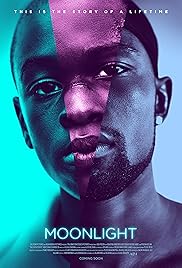
Fake Oscar Fiasco: Warren Beatty and Faye Dunaway WRONGLY name La La Land best picture as producers are forced to stop their speech and hand statue BACK to rightful winner Moonlight in extraordinary scenes

This story comes from the Daily Mail and is written by JUSTIN ENRIQUEZ and BAZ BAMIGBOYE. 

Image result for la la land
This is the recent news of the blunder at Oscars 2017 where La La Land was named Best Picture by accident, instead of the real winner, Moonlight. Warren Beatty was handed the backup envelope for the winner of Best Actress for Emma Stone, La La Land.

Image result for moonlightThis is a significant year as in 2016 many actors boycotted the Oscars due to the 'Oscar So White' campaign, by which the awards ceremony was criticised for not representing a diverse range of ethnicities and races. Whereas now In 2017, Best Picture is awarded to a film of predominantly black casting and production. I think that Moonlight, along with other winning pictures such as Viola Davis winning Best Supporting actress in Fences, shows progress in the right direction for the film industry in terms of equality in representation, not perfect representation but refreshingly more diverse than last year's Oscars. 

The 'accident' could be perceived as a publicity stunt and the expense of both the award announcers, Warren Beatty and Faye Dunaway, and of course, La La Land. This stunt I feel detracts some of the praise away from what should be the main focus, Moonlight. Even in the above headline La La Land is mentioned before Moonlight giving it precedence of the focal point. 

Personally, I think La La Land is very overrated and seems to have some advantage for being a film about the industry, in which it was being awarded, and that despite the blunder, Moonlight is very worthy winner.

Monday, 6 February 2017

Weekly News 51

'IT WAS REHEARSED' 

Jedward hint Celebrity Big Brother is ‘fixed’ after posting scathing rants about ‘fake’ housemates


This story comes from the Sun written by Ola Nojomu This story follows an interview of Irish Pop duo Jedward, or John and Edward Grimes, after their recent stint in channel 5 show, Celebrity Big Brother. The pair labelled their fellow housemates as 'fake' and claimed they had been told to say certain things by their agents. This is interesting in highlighting the more modern 'issue' or 'concern' of reality TV being scripted and constructed, even a seemingly 'raw' programme such as Big Brother. The perspective of this article portrays the Jedward brothers to almost seem petty, after coming runner up to winner Coleen Nolan, when I think most people of sound mind would be aware of the staging of the infamous CBB. This is evident from last series when the online live stream was left on revealing an extremely scripted scene in the Big Brother House. 

The fact that there is distain between the housemates, even after the show has finished, will act as more publicity for the show rather than to its detriment, as it revealed that Jedward released a lot of these statements during a press conference, therefore demonstrating the importance of the media in allowing shows like this to continue, despite this years final being the least watched yet with a mediocre 2.2 million viewers.